

Technology
Digital Dentistry at Denthill
From digital records to restoration design, explore how technology can support different stages of your care.
The right workflow starts with a clinical assessment—not a device.
01 · Digital Restoration Workflow
CAD-CAM / CEREC
From a digital record to a restoration—
with clinical decisions at every stage.
The technology
CAD-CAM means computer-aided design and manufacturing. CEREC is a system within this wider digital-restoration approach.
Its place in care
Digital records can inform the design and production of selected restorations, followed by clinical review and fit.
What it can support
A shared digital record can help connect the dentist’s design decisions with the production workflow.
What still needs assessment
Suitability, materials and timing depend on the clinical plan. Another method or additional appointments may be needed.
A Possible Workflow
Four connected stages
- 01
Digital capture
Record the surfaces needed for the planned restoration.
- 02
Digital design
Develop a restoration design from the clinical records.
- 03
Production
Produce the restoration through the selected workflow.
- 04
Clinical review & fit
Assess the restoration and make any necessary adjustments.
Illustrative sequence. Production location, timing and number of visits depend on the individual plan.
02 · Digital Scanning
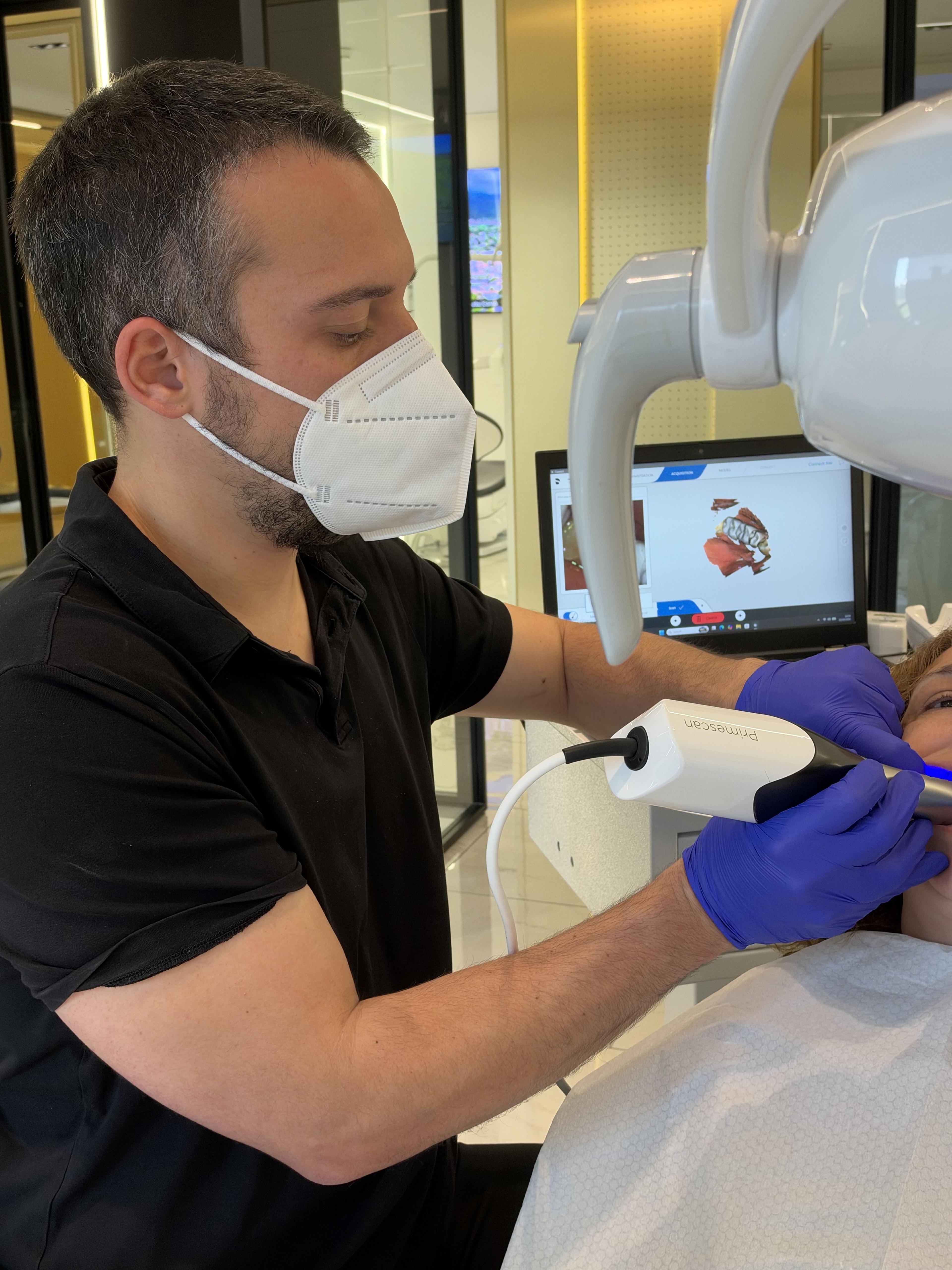
A digital record of tooth surfaces
An intraoral scan records visible tooth and gum surfaces as a digital model.
- When it enters the process
- During selected assessment, restoration or orthodontic-planning workflows.
- What the record helps with
- The model can support design discussions and communication with a laboratory.
- Where its role ends
- It does not show every structure or replace an examination. Conventional impressions or other records may still be appropriate.
03 · 3D Imaging & Planning
Another perspective, when it is needed
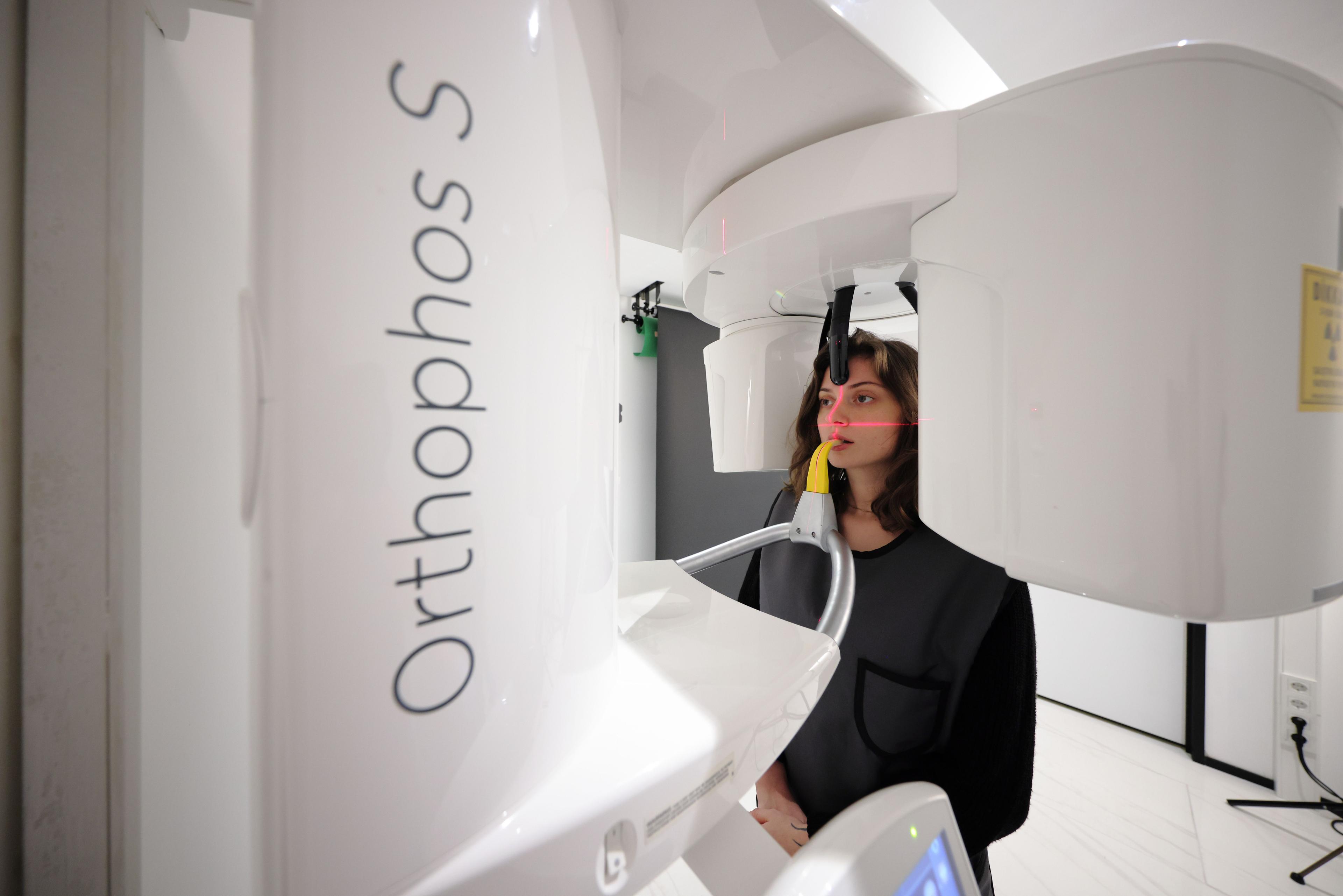
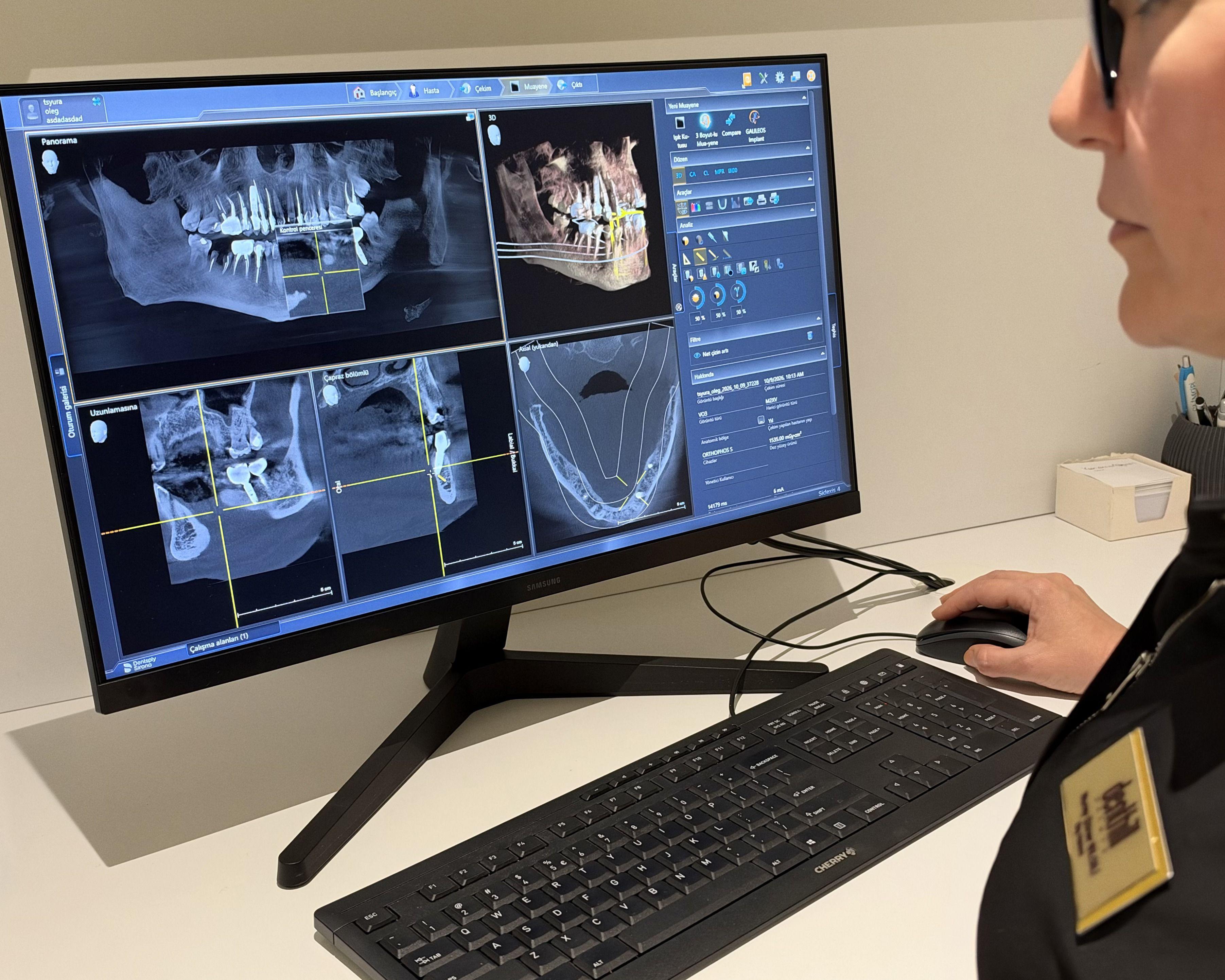
Three-dimensional imaging can add anatomical information beyond what is visible at the surface.
- When it enters the process
- A dentist may request imaging to investigate a particular clinical question or inform planning.
- What the record helps with
- It can support an assessment of anatomical relationships alongside examination findings.
- Where its role ends
- It is not routine for every patient. Clinical indication and individual radiation considerations determine whether it is appropriate.
Technology in Context
Better information.
Still a clinical decision.
Digital tools contribute to the picture. Your examination, needs and clinical plan determine which tools belong in your care.
Explore the Care Context
Start with the treatment, not the tool
Explore Denthill
Continue with the people, place or care.
Move from the role of technology to the clinical team, the clinic environment or the full treatment overview.